

9/11 Memorial & Museum: A Powerful Tribute at the Heart of Lower Manhattan
9/11 Memorial & Museum: A Powerful Tribute at the Heart of Lower Manhattan
Lower Manhattan (World Trade Center site)
Lower Manhattan (World Trade Center site)
Visit one of New York’s most moving landmarks, where twin reflecting pools, tree-lined plazas, and a deeply immersive museum honor the lives lost on September 11. Located at the World Trade Center site in Lower Manhattan, the 9/11 Memorial & Museum offers travelers staying near Prospect Park and based at Prospect Park Stays a meaningful, reflective experience essential to understanding the city’s history.
The 9/11 Memorial & Museum is one of the most emotionally powerful places in New York City. Set at the former World Trade Center site in Lower Manhattan, it stands as both a place of remembrance and a space for learning, reflection, and collective memory. Unlike many city attractions that dazzle with spectacle, this site invites quiet, presence, and respect. A visit here is not rushed or casual. It is an experience that stays with you long after you leave.
Above ground, the memorial plaza immediately sets the tone. Two massive reflecting pools sit within the original footprints of the Twin Towers, each bordered by dark stone walls where the names of nearly 3,000 victims are engraved. Water cascades continuously into the pools, disappearing into a central void. The sound of the water softens the surrounding city noise, creating an atmosphere that feels unexpectedly calm despite being in one of the busiest parts of Manhattan. Visitors walk slowly along the edges, tracing names with their fingers, leaving flowers, or standing quietly in reflection.
The surrounding plaza is filled with swamp white oak trees, chosen for their symbolism of endurance and rebirth. These trees provide shade, softness, and life to a space shaped by loss. At different times of day, the light changes the mood of the memorial. In the morning, it feels serene and contemplative. In the evening, as the city lights begin to glow, the pools take on a deeper, more solemn presence. It is a place where silence feels appropriate, even among crowds.
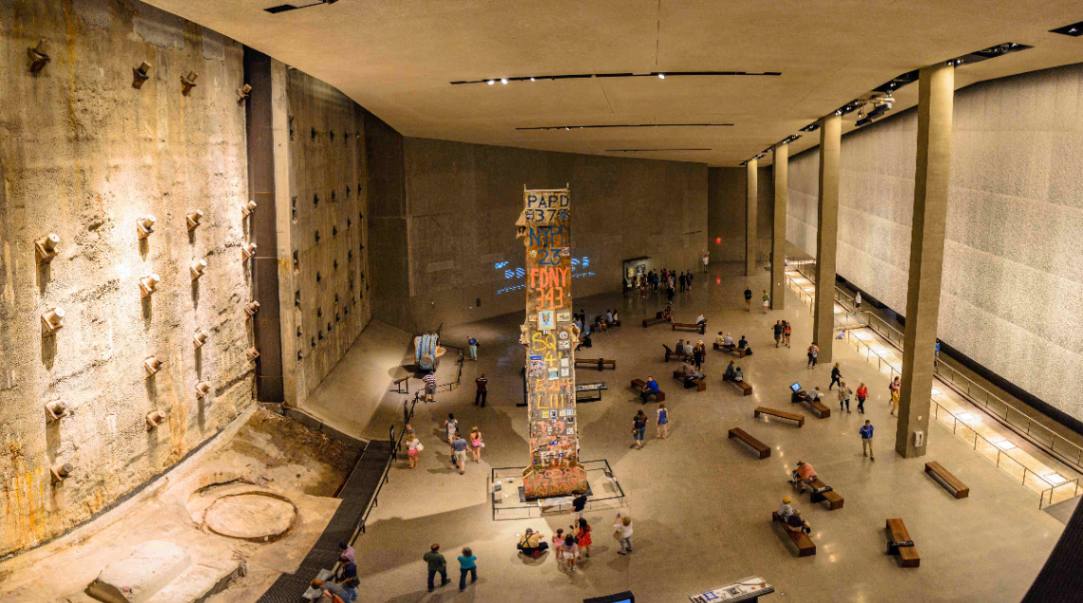
Beneath the plaza lies the 9/11 Museum, an immersive and deeply moving experience that explores the events of September 11, 2001, and their lasting impact. Entering the museum is a descent both physically and emotionally. Visitors move through exhibitions that document the day in real time, combining historical artifacts, photographs, video footage, personal stories, and recorded voices. The approach is factual but deeply human, focusing on individual lives rather than abstract numbers.
One of the most powerful aspects of the museum is its use of personal artifacts. Items recovered from the site, such as damaged vehicles, twisted steel beams, fire helmets, and everyday objects, ground the story in physical reality. Alongside these are recorded messages from loved ones, first responders, and survivors. Hearing these voices adds emotional weight, making the scale of the tragedy more personal and immediate.
The museum also dedicates significant space to honoring the first responders and rescue workers who risked and lost their lives. Their courage, sacrifice, and sense of duty are woven throughout the exhibits, offering a fuller understanding of the heroism and humanity present amid the devastation. These sections often resonate deeply with visitors, reminding them that the story of September 11 is not only about loss, but also about resilience and compassion.
What makes the 9/11 Museum particularly impactful is its thoughtful pacing. There is no pressure to move quickly. Quiet areas allow visitors to pause, sit, and process what they’ve seen. The design encourages reflection rather than overload, recognizing that this is an emotional experience as much as an educational one. Many visitors leave feeling changed, carrying a deeper appreciation for the city, its people, and the global significance of the events commemorated here.
The memorial’s location within the rebuilt World Trade Center complex adds another layer of meaning. Surrounding the site are modern skyscrapers, public art, transportation hubs, and new life. One World Trade Center rises nearby, symbolizing resilience and renewal. This contrast between remembrance and rebuilding is intentional, showing how the city continues forward while honoring its past.
For travelers staying at Prospect Park Stays, visiting the 9/11 Memorial & Museum is an accessible and meaningful day trip. The subway ride from Brooklyn is straightforward, making it easy to reach Lower Manhattan without feeling disconnected from the calmer, residential rhythm near Prospect Park. Many guests choose to pair their visit with a walk through nearby neighborhoods such as Tribeca, the Seaport, or Battery Park, creating a day that balances reflection with exploration.
The experience often feels especially grounding for visitors who have been enjoying New York’s energy, culture, and neighborhoods. It provides context for the city’s resilience and its sense of shared identity. For international travelers, it offers insight into a defining moment in modern American history. For domestic visitors, it often becomes a moment of quiet connection and remembrance.
A visit to the 9/11 Memorial & Museum is not about entertainment or spectacle. It is about understanding, honoring, and remembering. It encourages visitors to slow down, to listen, and to reflect on the lives that shaped the city we see today. For those based at Prospect Park Stays, this experience adds depth and meaning to a New York itinerary, balancing neighborhood discovery with one of the city’s most important landmarks.
In the end, the memorial does exactly what it was designed to do. It preserves memory, honors lives, and creates space for reflection in the middle of a constantly moving city. It is a place every visitor should experience at least once, not as a checkbox on a list, but as a moment of connection to New York’s history, humanity, and enduring spirit.
The 9/11 Memorial & Museum is one of the most emotionally powerful places in New York City. Set at the former World Trade Center site in Lower Manhattan, it stands as both a place of remembrance and a space for learning, reflection, and collective memory. Unlike many city attractions that dazzle with spectacle, this site invites quiet, presence, and respect. A visit here is not rushed or casual. It is an experience that stays with you long after you leave.
Above ground, the memorial plaza immediately sets the tone. Two massive reflecting pools sit within the original footprints of the Twin Towers, each bordered by dark stone walls where the names of nearly 3,000 victims are engraved. Water cascades continuously into the pools, disappearing into a central void. The sound of the water softens the surrounding city noise, creating an atmosphere that feels unexpectedly calm despite being in one of the busiest parts of Manhattan. Visitors walk slowly along the edges, tracing names with their fingers, leaving flowers, or standing quietly in reflection.
The surrounding plaza is filled with swamp white oak trees, chosen for their symbolism of endurance and rebirth. These trees provide shade, softness, and life to a space shaped by loss. At different times of day, the light changes the mood of the memorial. In the morning, it feels serene and contemplative. In the evening, as the city lights begin to glow, the pools take on a deeper, more solemn presence. It is a place where silence feels appropriate, even among crowds.
Beneath the plaza lies the 9/11 Museum, an immersive and deeply moving experience that explores the events of September 11, 2001, and their lasting impact. Entering the museum is a descent both physically and emotionally. Visitors move through exhibitions that document the day in real time, combining historical artifacts, photographs, video footage, personal stories, and recorded voices. The approach is factual but deeply human, focusing on individual lives rather than abstract numbers.
One of the most powerful aspects of the museum is its use of personal artifacts. Items recovered from the site, such as damaged vehicles, twisted steel beams, fire helmets, and everyday objects, ground the story in physical reality. Alongside these are recorded messages from loved ones, first responders, and survivors. Hearing these voices adds emotional weight, making the scale of the tragedy more personal and immediate.
The museum also dedicates significant space to honoring the first responders and rescue workers who risked and lost their lives. Their courage, sacrifice, and sense of duty are woven throughout the exhibits, offering a fuller understanding of the heroism and humanity present amid the devastation. These sections often resonate deeply with visitors, reminding them that the story of September 11 is not only about loss, but also about resilience and compassion.
What makes the 9/11 Museum particularly impactful is its thoughtful pacing. There is no pressure to move quickly. Quiet areas allow visitors to pause, sit, and process what they’ve seen. The design encourages reflection rather than overload, recognizing that this is an emotional experience as much as an educational one. Many visitors leave feeling changed, carrying a deeper appreciation for the city, its people, and the global significance of the events commemorated here.
The memorial’s location within the rebuilt World Trade Center complex adds another layer of meaning. Surrounding the site are modern skyscrapers, public art, transportation hubs, and new life. One World Trade Center rises nearby, symbolizing resilience and renewal. This contrast between remembrance and rebuilding is intentional, showing how the city continues forward while honoring its past.
For travelers staying at Prospect Park Stays, visiting the 9/11 Memorial & Museum is an accessible and meaningful day trip. The subway ride from Brooklyn is straightforward, making it easy to reach Lower Manhattan without feeling disconnected from the calmer, residential rhythm near Prospect Park. Many guests choose to pair their visit with a walk through nearby neighborhoods such as Tribeca, the Seaport, or Battery Park, creating a day that balances reflection with exploration.
The experience often feels especially grounding for visitors who have been enjoying New York’s energy, culture, and neighborhoods. It provides context for the city’s resilience and its sense of shared identity. For international travelers, it offers insight into a defining moment in modern American history. For domestic visitors, it often becomes a moment of quiet connection and remembrance.
A visit to the 9/11 Memorial & Museum is not about entertainment or spectacle. It is about understanding, honoring, and remembering. It encourages visitors to slow down, to listen, and to reflect on the lives that shaped the city we see today. For those based at Prospect Park Stays, this experience adds depth and meaning to a New York itinerary, balancing neighborhood discovery with one of the city’s most important landmarks.
In the end, the memorial does exactly what it was designed to do. It preserves memory, honors lives, and creates space for reflection in the middle of a constantly moving city. It is a place every visitor should experience at least once, not as a checkbox on a list, but as a moment of connection to New York’s history, humanity, and enduring spirit.
By LunaEscapes | Short-term rentals near Prospect Park on 16th Street in Windsor Terrace, Brooklyn