

The High Line: New York’s Elevated Park of Art, Architecture, and Skyline Views
The High Line: New York’s Elevated Park of Art, Architecture, and Skyline Views
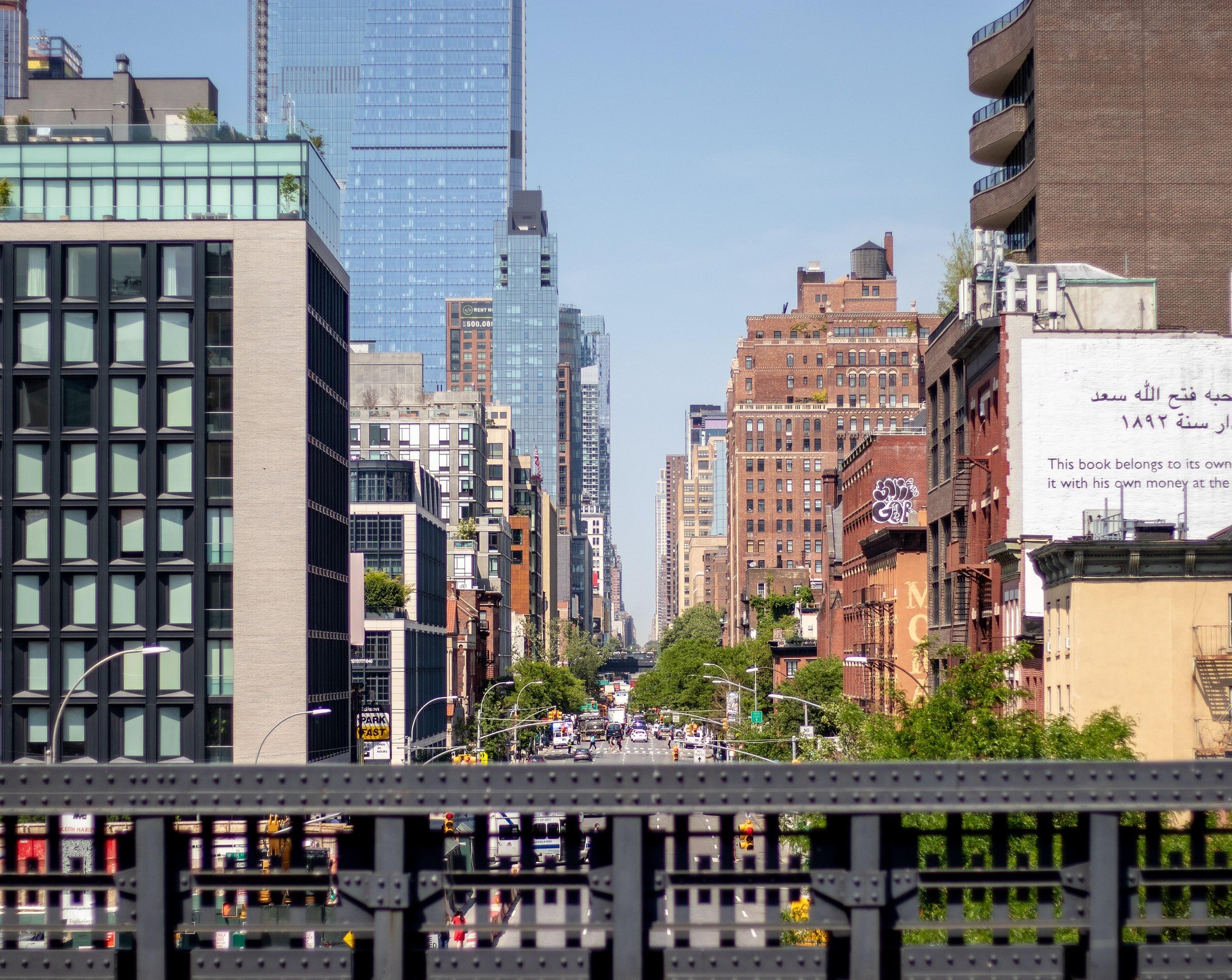
Chelsea & Hudson Yards, Manhattan (west side)
Chelsea & Hudson Yards, Manhattan (west side)
Walk above the streets of Manhattan on the High Line, an elevated park built along historic railway tracks that now features gardens, public art, Hudson River views, and some of the city’s most striking architecture. This scenic pathway offers travelers staying at Prospect Park Stays a peaceful, beautifully designed escape in the heart of New York, easily reached by subway from Brooklyn and perfect for slow exploration, photography, and city views.
The High Line is one of New York City’s most inventive and beloved public spaces, a place where urban design, landscape architecture, art, and everyday life come together in a way that feels uniquely modern yet deeply connected to the city’s past. What was once an abandoned freight rail line has been transformed into a linear park that floats above Manhattan’s West Side, offering visitors a fresh perspective on the city while maintaining a calm, walkable rhythm rarely found at street level.
Stretching for more than a mile from Hudson Yards down through Chelsea to the Meatpacking District, the High Line invites visitors to move slowly. Instead of rushing from one attraction to the next, the experience here is about wandering, pausing, sitting, and observing. Wooden lounge chairs slide along old rail tracks, native grasses sway in the wind, and pathways curve gently through planted gardens that change with the seasons. Spring brings blooms and fresh greens, summer fills the park with lush foliage, fall introduces warm tones and crisp air, and winter reveals the structure’s clean lines and industrial bones.
One of the most striking aspects of the High Line is how it frames New York’s architecture. On one side, you’ll see historic brick warehouses and former industrial buildings that hint at the neighborhood’s working past. On the other, ultra-modern residential towers, museums, and glass structures rise dramatically, creating a constant dialogue between old and new. Walking the High Line feels like moving through a living architectural exhibit, where every turn offers a new angle, reflection, or skyline view.
Public art is woven seamlessly into the experience. Sculptures, murals, installations, and performance pieces appear throughout the park, many of them temporary and rotating throughout the year. Some works are bold and immediately visible, while others are subtle and reveal themselves only if you’re paying attention. This ever-changing art program ensures that no two visits feel exactly the same, even for repeat travelers.
The views are another major draw. From various points along the path, visitors can look west toward the Hudson River and watch boats glide past piers and parks. Other sections offer cinematic views down Manhattan’s avenues, with traffic flowing far below like a moving grid. Sunset is especially popular, when the light softens, the river reflects warm tones, and the city seems to slow just enough to feel poetic.
The High Line is also deeply social without being overwhelming. Locals walk dogs, couples linger on benches, photographers line up shots, and visitors from around the world share the space without it ever feeling chaotic. There are quiet corners for reading or resting, as well as livelier sections near food vendors and seating areas where conversation hums softly in the background.
Access points along the route make it easy to enter and exit at different neighborhoods, allowing visitors to combine the walk with nearby destinations. Many people pair the High Line with Hudson Yards, Chelsea galleries, the Meatpacking District, or a visit to the Whitney Museum. Cafés, bakeries, and casual restaurants sit just steps away from staircases and elevators, making it easy to turn the walk into a full afternoon outing.
For travelers staying at Prospect Park Stays, the High Line offers a perfect contrast to Brooklyn’s leafy calm. The subway ride into Manhattan is straightforward, and the reward is a completely different kind of green space. Where Prospect Park feels expansive and natural, the High Line feels curated and urban, a reminder of how creatively New York reimagines its infrastructure.
The elevated design also makes the High Line feel accessible and unintimidating for visitors who want a relaxed activity without a strict schedule. There are no tickets, no set route, and no pressure to see everything at once. You can walk the full length or just a section, stay for ten minutes or two hours, and still feel like you’ve experienced something special.
What makes the High Line truly memorable is how it changes your relationship with the city. Being above street level creates a sense of separation without isolation. You are still surrounded by New York’s energy, but you experience it at a gentler pace, framed by plants, art, and open sky. It encourages reflection, conversation, and a kind of urban mindfulness that surprises many first-time visitors.
For guests based at Prospect Park Stays, a visit to the High Line is an easy, rewarding way to explore Manhattan without the intensity of traditional sightseeing. It fits naturally into a day of wandering, pairs beautifully with nearby neighborhoods, and offers views and moments that linger long after the walk ends. The High Line is not just a park. It is one of New York’s most thoughtful expressions of how a city can evolve while still honoring where it came from.
The High Line is one of New York City’s most inventive and beloved public spaces, a place where urban design, landscape architecture, art, and everyday life come together in a way that feels uniquely modern yet deeply connected to the city’s past. What was once an abandoned freight rail line has been transformed into a linear park that floats above Manhattan’s West Side, offering visitors a fresh perspective on the city while maintaining a calm, walkable rhythm rarely found at street level.
Stretching for more than a mile from Hudson Yards down through Chelsea to the Meatpacking District, the High Line invites visitors to move slowly. Instead of rushing from one attraction to the next, the experience here is about wandering, pausing, sitting, and observing. Wooden lounge chairs slide along old rail tracks, native grasses sway in the wind, and pathways curve gently through planted gardens that change with the seasons. Spring brings blooms and fresh greens, summer fills the park with lush foliage, fall introduces warm tones and crisp air, and winter reveals the structure’s clean lines and industrial bones.
One of the most striking aspects of the High Line is how it frames New York’s architecture. On one side, you’ll see historic brick warehouses and former industrial buildings that hint at the neighborhood’s working past. On the other, ultra-modern residential towers, museums, and glass structures rise dramatically, creating a constant dialogue between old and new. Walking the High Line feels like moving through a living architectural exhibit, where every turn offers a new angle, reflection, or skyline view.
Public art is woven seamlessly into the experience. Sculptures, murals, installations, and performance pieces appear throughout the park, many of them temporary and rotating throughout the year. Some works are bold and immediately visible, while others are subtle and reveal themselves only if you’re paying attention. This ever-changing art program ensures that no two visits feel exactly the same, even for repeat travelers.
The views are another major draw. From various points along the path, visitors can look west toward the Hudson River and watch boats glide past piers and parks. Other sections offer cinematic views down Manhattan’s avenues, with traffic flowing far below like a moving grid. Sunset is especially popular, when the light softens, the river reflects warm tones, and the city seems to slow just enough to feel poetic.
The High Line is also deeply social without being overwhelming. Locals walk dogs, couples linger on benches, photographers line up shots, and visitors from around the world share the space without it ever feeling chaotic. There are quiet corners for reading or resting, as well as livelier sections near food vendors and seating areas where conversation hums softly in the background.
Access points along the route make it easy to enter and exit at different neighborhoods, allowing visitors to combine the walk with nearby destinations. Many people pair the High Line with Hudson Yards, Chelsea galleries, the Meatpacking District, or a visit to the Whitney Museum. Cafés, bakeries, and casual restaurants sit just steps away from staircases and elevators, making it easy to turn the walk into a full afternoon outing.
For travelers staying at Prospect Park Stays, the High Line offers a perfect contrast to Brooklyn’s leafy calm. The subway ride into Manhattan is straightforward, and the reward is a completely different kind of green space. Where Prospect Park feels expansive and natural, the High Line feels curated and urban, a reminder of how creatively New York reimagines its infrastructure.
The elevated design also makes the High Line feel accessible and unintimidating for visitors who want a relaxed activity without a strict schedule. There are no tickets, no set route, and no pressure to see everything at once. You can walk the full length or just a section, stay for ten minutes or two hours, and still feel like you’ve experienced something special.
What makes the High Line truly memorable is how it changes your relationship with the city. Being above street level creates a sense of separation without isolation. You are still surrounded by New York’s energy, but you experience it at a gentler pace, framed by plants, art, and open sky. It encourages reflection, conversation, and a kind of urban mindfulness that surprises many first-time visitors.
For guests based at Prospect Park Stays, a visit to the High Line is an easy, rewarding way to explore Manhattan without the intensity of traditional sightseeing. It fits naturally into a day of wandering, pairs beautifully with nearby neighborhoods, and offers views and moments that linger long after the walk ends. The High Line is not just a park. It is one of New York’s most thoughtful expressions of how a city can evolve while still honoring where it came from.
By LunaEscapes | Short-term rentals near Prospect Park on 16th Street in Windsor Terrace, Brooklyn