

Hudson Yards & The Vessel: New York’s Modern Landmark on the West Side
Hudson Yards & The Vessel: New York’s Modern Landmark on the West Side
West Side of Manhattan (Hudson Yards district)
West Side of Manhattan (Hudson Yards district)
Explore one of New York City’s newest and most visually striking districts, where futuristic skyscrapers, innovative public art, upscale dining, and sweeping Hudson River views come together on Manhattan’s West Side. Hudson Yards and The Vessel offer travelers a sleek, walkable destination that showcases the city’s modern evolution, easily accessible by subway from Prospect Park and ideal for a half-day or full-day urban exploration.
Hudson Yards represents a bold new chapter in New York City’s story. Rising above Manhattan’s West Side, this expansive development transforms what was once an industrial rail yard into a forward-looking neighborhood defined by glass towers, curated public spaces, and a distinctly modern energy. Visiting Hudson Yards feels different from walking through historic neighborhoods like Midtown or Lower Manhattan. It offers a glimpse into how New York continues to reinvent itself while remaining unmistakably itself.
At the heart of the district is Hudson Yards, a master-planned area that blends architecture, shopping, dining, and public space into a single, cohesive environment. The scale of the neighborhood is immediately noticeable. Wide walkways, open plazas, and soaring buildings create a sense of space rarely experienced in Manhattan. Everything feels intentional, from the alignment of streets to the way sunlight reflects off the glass facades throughout the day.
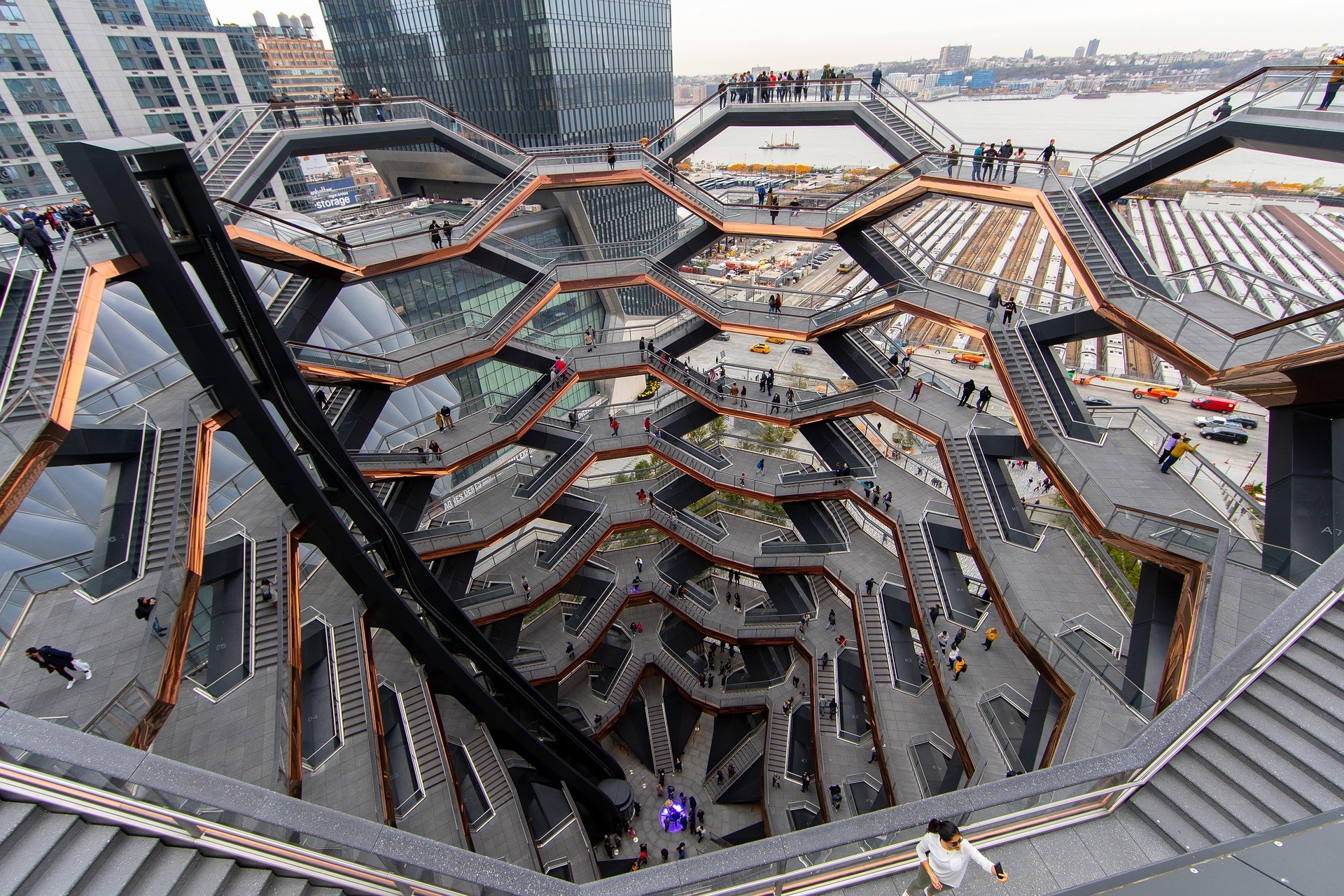
One of Hudson Yards’ most recognizable features is The Vessel. This striking honeycomb-shaped structure of interconnected staircases quickly became one of the city’s most talked-about modern landmarks. Its copper-toned exterior shifts color depending on the light, making it especially dramatic during sunrise and sunset. Even viewed from the ground, The Vessel creates a powerful visual experience, inviting visitors to pause, look upward, and take in the ambitious scale of contemporary public art in New York.
Surrounding The Vessel is the Public Square and Gardens, a thoughtfully designed open space that brings greenery into the heart of the district. Seating areas, landscaped paths, and seasonal plantings soften the modern architecture and make the plaza a natural gathering point. Office workers eat lunch here, visitors rest between activities, and photographers capture the contrast between steel, sky, and movement. The space changes subtly with the seasons, offering a different feel in summer sunlight than on crisp winter days.
Hudson Yards is also a major destination for shopping and dining. The Shops at Hudson Yards feature a mix of luxury retailers, designer boutiques, and flagship stores housed inside a sleek, multi-level structure. Even travelers with no intention of shopping often walk through simply to experience the design and atmosphere. Dining options range from casual cafés to polished restaurants, many offering views of the plaza or the Hudson River, turning meals into scenic pauses rather than just necessities.
One of the district’s strongest features is its proximity to the waterfront. Just west of Hudson Yards, the Hudson River Greenway opens into long walking and biking paths that run parallel to the river. From here, visitors enjoy open skies, water views, passing ferries, and some of the city’s most beautiful sunsets. This stretch of the West Side feels calmer and more expansive than many parts of Manhattan, making it ideal for strolling, relaxing, or simply watching the city unfold at a slower pace.
Hudson Yards also serves as the northern gateway to the High Line, the iconic elevated park that runs south through Chelsea and the Meatpacking District. Entering the High Line from Hudson Yards feels like transitioning from a futuristic plaza into a linear garden suspended above the streets. Art installations, landscaped pathways, and unique city viewpoints guide visitors through some of Manhattan’s most dynamic neighborhoods, creating an experience that blends nature, architecture, and urban life.
Architecturally, Hudson Yards is a showcase of contemporary design. The towers feature clean lines, reflective glass, and bold silhouettes that have reshaped the West Side skyline. For visitors interested in architecture or urban planning, the neighborhood offers insight into how modern cities grow vertically while integrating public space and infrastructure. The contrast between Hudson Yards and older parts of Manhattan highlights the city’s constant evolution.
Despite its modern feel, Hudson Yards remains deeply connected to the rest of New York. Subway access makes it easy to reach from Brooklyn and other boroughs, and its location near Chelsea, Midtown, and the river ensures it never feels isolated. Many travelers combine a visit here with nearby attractions, turning Hudson Yards into one stop within a larger day of exploration.
What makes Hudson Yards especially compelling is the contrast it provides. After walking through historic districts filled with brownstones, landmarks, and older institutions, arriving here feels like stepping into a different era of New York. It shows how the city continues to move forward, embracing innovation while remaining layered with history elsewhere.
A visit to Hudson Yards is not about nostalgia. It is about scale, design, and the future-facing identity of New York City. Whether you come for The Vessel, the waterfront views, the High Line connection, or the sheer visual impact of the architecture, Hudson Yards offers a distinctive experience that adds depth and contrast to any New York itinerary.
Hudson Yards represents a bold new chapter in New York City’s story. Rising above Manhattan’s West Side, this expansive development transforms what was once an industrial rail yard into a forward-looking neighborhood defined by glass towers, curated public spaces, and a distinctly modern energy. Visiting Hudson Yards feels different from walking through historic neighborhoods like Midtown or Lower Manhattan. It offers a glimpse into how New York continues to reinvent itself while remaining unmistakably itself.
At the heart of the district is Hudson Yards, a master-planned area that blends architecture, shopping, dining, and public space into a single, cohesive environment. The scale of the neighborhood is immediately noticeable. Wide walkways, open plazas, and soaring buildings create a sense of space rarely experienced in Manhattan. Everything feels intentional, from the alignment of streets to the way sunlight reflects off the glass facades throughout the day.
One of Hudson Yards’ most recognizable features is The Vessel. This striking honeycomb-shaped structure of interconnected staircases quickly became one of the city’s most talked-about modern landmarks. Its copper-toned exterior shifts color depending on the light, making it especially dramatic during sunrise and sunset. Even viewed from the ground, The Vessel creates a powerful visual experience, inviting visitors to pause, look upward, and take in the ambitious scale of contemporary public art in New York.
Surrounding The Vessel is the Public Square and Gardens, a thoughtfully designed open space that brings greenery into the heart of the district. Seating areas, landscaped paths, and seasonal plantings soften the modern architecture and make the plaza a natural gathering point. Office workers eat lunch here, visitors rest between activities, and photographers capture the contrast between steel, sky, and movement. The space changes subtly with the seasons, offering a different feel in summer sunlight than on crisp winter days.
Hudson Yards is also a major destination for shopping and dining. The Shops at Hudson Yards feature a mix of luxury retailers, designer boutiques, and flagship stores housed inside a sleek, multi-level structure. Even travelers with no intention of shopping often walk through simply to experience the design and atmosphere. Dining options range from casual cafés to polished restaurants, many offering views of the plaza or the Hudson River, turning meals into scenic pauses rather than just necessities.
One of the district’s strongest features is its proximity to the waterfront. Just west of Hudson Yards, the Hudson River Greenway opens into long walking and biking paths that run parallel to the river. From here, visitors enjoy open skies, water views, passing ferries, and some of the city’s most beautiful sunsets. This stretch of the West Side feels calmer and more expansive than many parts of Manhattan, making it ideal for strolling, relaxing, or simply watching the city unfold at a slower pace.
Hudson Yards also serves as the northern gateway to the High Line, the iconic elevated park that runs south through Chelsea and the Meatpacking District. Entering the High Line from Hudson Yards feels like transitioning from a futuristic plaza into a linear garden suspended above the streets. Art installations, landscaped pathways, and unique city viewpoints guide visitors through some of Manhattan’s most dynamic neighborhoods, creating an experience that blends nature, architecture, and urban life.
Architecturally, Hudson Yards is a showcase of contemporary design. The towers feature clean lines, reflective glass, and bold silhouettes that have reshaped the West Side skyline. For visitors interested in architecture or urban planning, the neighborhood offers insight into how modern cities grow vertically while integrating public space and infrastructure. The contrast between Hudson Yards and older parts of Manhattan highlights the city’s constant evolution.
Despite its modern feel, Hudson Yards remains deeply connected to the rest of New York. Subway access makes it easy to reach from Brooklyn and other boroughs, and its location near Chelsea, Midtown, and the river ensures it never feels isolated. Many travelers combine a visit here with nearby attractions, turning Hudson Yards into one stop within a larger day of exploration.
What makes Hudson Yards especially compelling is the contrast it provides. After walking through historic districts filled with brownstones, landmarks, and older institutions, arriving here feels like stepping into a different era of New York. It shows how the city continues to move forward, embracing innovation while remaining layered with history elsewhere.
A visit to Hudson Yards is not about nostalgia. It is about scale, design, and the future-facing identity of New York City. Whether you come for The Vessel, the waterfront views, the High Line connection, or the sheer visual impact of the architecture, Hudson Yards offers a distinctive experience that adds depth and contrast to any New York itinerary.
By LunaEscapes | Short-term rentals near Prospect Park on 16th Street in Windsor Terrace, Brooklyn